
What “Antigravity extensions” can mean
The phrase Antigravity extensions is broader than one download button. Search results can mix an IDE plugin, a VS Code marketplace package, a Gemini CLI extension, a browser add-on, or a local customization file. Before installing anything, identify the surface that owns the package and the job you want it to do.
For a current Antigravity workflow, use the product's documented plugin or extension entry point and confirm what the package is allowed to access. Keep MCP servers separate: MCP connects external tools and belongs to the MCP configuration workflow, not to a generic extension list.
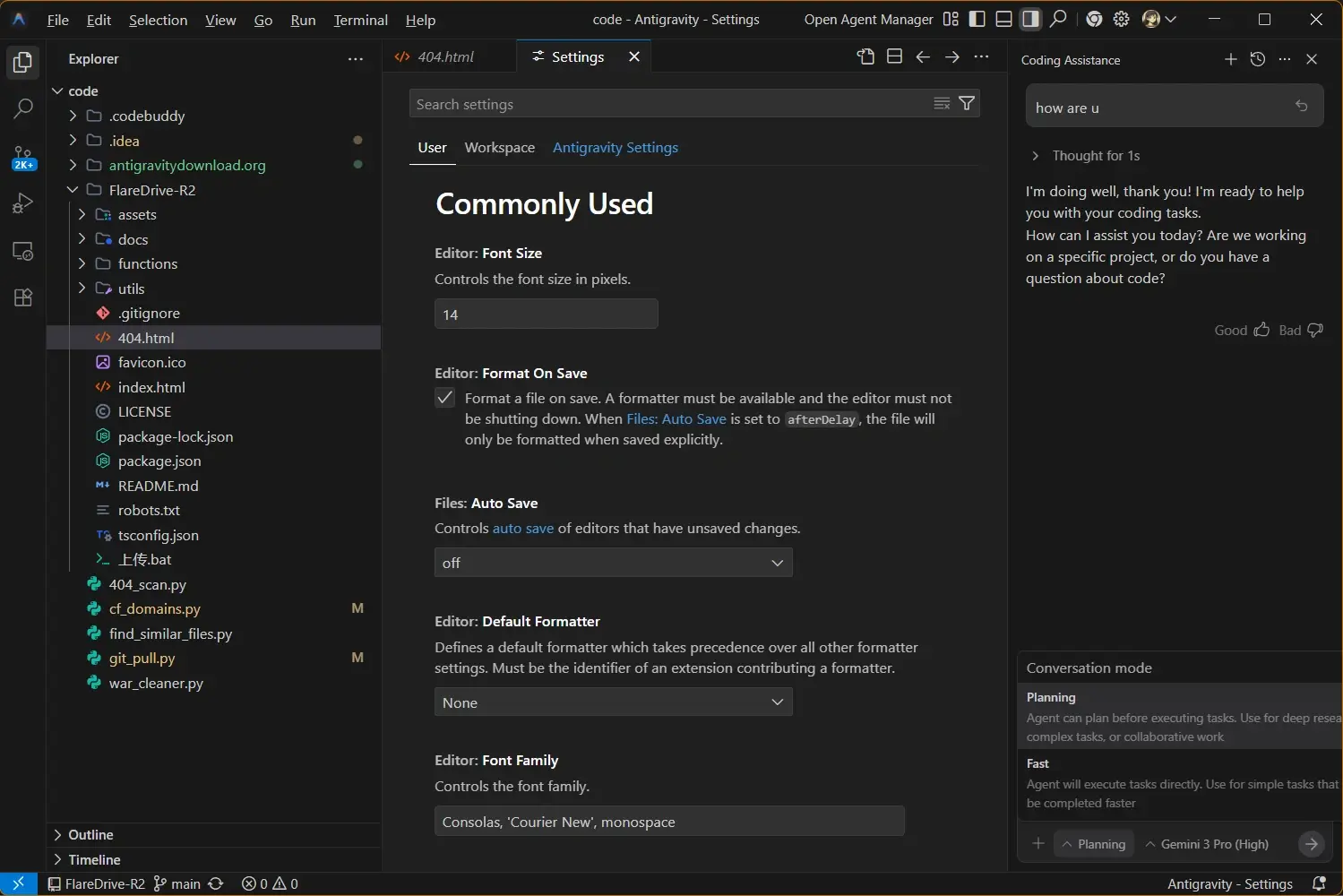
How to add extensions to Antigravity
The safest installation path is short and repeatable. Record the package name and source, open the extension or plugin view inside the current Antigravity product, install only the supported package, and reload before judging the result. If the package asks for broad shell, file, browser, or network access, pause and review the permission boundary first.
Do not start by copying hidden application directories. A copied folder can contain binaries, stale metadata, machine-specific paths, or credentials. A clean install from the documented source gives you a better signal when you are diagnosing an incompatibility.
- 1. Name the target surfaceDecide whether you need an IDE plugin, a CLI extension, an MCP server, or a browser add-on. The same word extension can refer to different package formats.
- 2. Check the official entry pointOpen the current Antigravity documentation or in-product marketplace. Confirm the publisher, supported product surface, required version, and requested permissions.
- 3. Install or import the smallest unitInstall one package or move one configuration group at a time. Keep a copy of the original settings so a failed import is reversible.
- 4. Reload and test a read-only actionRestart or reload the product, check whether the extension command appears, and run a harmless workspace inspection before enabling write or shell actions.
- 5. Record the working combinationWrite down the Antigravity version, package version, settings scope, and workspace. This makes a later update or rollback test explainable.
- Verify the source — Prefer the official documentation, marketplace listing, repository, or release notes. Avoid repacked extension archives with unclear publishers.
- Use one scope at a time — Check whether the package is installed for the user, workspace, project, or CLI profile. A correct package in the wrong scope can look missing.
- Review permissions — Treat shell execution, external network calls, browser control, and workspace writes as separate decisions. An extension is not safe merely because it has a familiar name.
If the current UI uses the word plugin instead of extension, follow the current label. Product terminology and marketplace locations can change between releases; the official docs and the installed product are the source of truth.
Import VS Code extensions and Gemini CLI customizations carefully
There is no safe universal import for every VS Code extension. Separate the portable idea from the package implementation: snippets, keybindings, formatter preferences, and plain-text instructions are often easier to recreate than compiled extensions, language servers, native binaries, or extensions that depend on VS Code-only APIs.
Gemini CLI migration has a similar boundary. A CLI extension may include commands, instruction files, settings, hooks, or MCP references. Move those pieces into the destination scope one at a time and test the terminal workflow separately from the IDE workflow.
| Source | Move | Check before enabling |
|---|---|---|
| VS Code extension package | Find a documented Antigravity equivalent or reinstall a package explicitly marked compatible. | Marketplace publisher, product API support, version range, native dependencies, and commands. |
| Settings, snippets, and keybindings | Copy only the relevant plain-text entries after backing up the original files. | JSON syntax, setting names, scope precedence, keyboard conflicts, and workspace trust. |
| Gemini CLI extension | Recreate supported commands, instruction files, or CLI settings in the documented CLI scope. | CLI version, PATH, shell profile, project directory, and whether the command is terminal-only. |
| MCP server | Configure it through the dedicated MCP workflow and keep its server definition separate. | Command path, environment variables, transport, permissions, and global versus workspace scope. |
How to choose the best Antigravity extensions
The best Antigravity extensions are not necessarily the most popular packages. Choose the smallest tool that solves a real workflow problem, has a clear publisher and update path, and stays within the permissions your project can tolerate.
Before enabling a package for a production repository, test it in a disposable or version-controlled workspace. Compare startup time, command visibility, generated files, network activity, and the quality of the reviewable diff.
PublisherPrefer a traceable source
The publisher, repository, release notes, and support channel should be identifiable. Treat a renamed mirror or an unsigned archive as a risk signal.
SurfaceMatch the product surface
A tool for the IDE, CLI, browser, and MCP stack may look similar but require different installation and permission models.
ScopeKeep configuration local
Use workspace or project scope when a tool only belongs to one repository. Avoid broad user-level settings until the behavior is understood.
PermissionsReview the blast radius
Ask whether the package can execute commands, write files, access the network, control a browser, or read secrets. Limit approvals accordingly.
MaintenanceCheck the update path
A package that has no current release notes, compatibility statement, or rollback path is a poor choice for a critical workflow.
EvidenceTest the real job
Validate one representative task and inspect the resulting files, logs, and diff instead of relying on an install-success message.
Antigravity extension troubleshooting
When an extension does not work, identify the failed layer before reinstalling. Most failures are a source, scope, version, permission, command-path, or product-surface mismatch.
The extension installed but no command appears
Reload the product, open the command palette, and confirm the package was installed in the active user or workspace scope. If it remains absent, check whether the package targets VS Code only or requires a different host surface.
The marketplace cannot find the package
Search the publisher's official documentation and repository, then compare the package name and product target. Do not install a similarly named browser extension or third-party repack just to fill the gap.
A VS Code extension fails after import
Restore the original state, remove copied binaries, and test a documented compatible equivalent. Native modules, language servers, and VS Code-specific APIs are common boundaries.
A Gemini CLI extension works in a terminal but not in the IDE
That may be expected. Compare the executable path, shell profile, project directory, CLI settings scope, and the IDE's integrated terminal environment. Keep the CLI workflow separate until the command is proven to be host-compatible.
The extension asks for too much access
Decline broad permissions, read the package documentation, and test with a small repository. If the tool needs production credentials or unrestricted shell access for a simple task, choose a narrower alternative.
The problem began after an update
Record both product and package versions, compare release notes, and reproduce in a clean workspace. Update the package or product only after you have a reversible rollback or a documented compatibility fix.
Version checks before you report compatibility
Compatibility statements are meaningful only when the product surface and version are named. The current verification for this site separates Antigravity 2.0, Antigravity IDE, and Antigravity CLI instead of treating them as one shared version number.
For a download or update, use the platform page's verified Google Storage file when available, or the official Google download page when a stable direct file cannot be independently verified. Record the check date with any extension bug report.
The six platform files used by this site returned HTTP 206 for a one-byte Range check; their total sizes, MIME types, stable paths, and ETags are recorded in the task validation evidence. A successful range response is not a malware scan, so keep the official source and normal security review in the workflow.
Antigravity extensions FAQ
What are Antigravity extensions?
The phrase can refer to an Antigravity plugin, a compatible editor add-on, a Gemini CLI extension, or a local customization. Identify the host surface first; an extension is not automatically portable between the IDE, CLI, browser, and MCP stack.
How do I add extensions to Antigravity?
Open the documented Antigravity plugin or extension entry point, verify the publisher and supported product surface, install one package, reload the product, and test a read-only command. Keep the settings scope and permissions visible while you test.
Can I import VS Code extensions to Antigravity?
Sometimes, but not as a universal folder copy. Look for a documented compatible version or equivalent. Snippets, keybindings, and plain-text settings are usually easier to recreate than compiled extensions, native modules, or packages that depend on VS Code-only APIs.
How do I import VS Code extensions to Antigravity safely?
Back up the original VS Code settings, make a list of the packages you actually use, install or recreate one supported item at a time, and verify commands, settings scope, permissions, and output files in a test workspace.
What are the best Antigravity extensions?
The best choice depends on the task. Prefer a traceable publisher, current compatibility notes, narrow permissions, a clear update path, and a real test result. A popular VS Code package is not automatically the best Antigravity plugin.
Can I use Gemini CLI extensions in Antigravity?
Treat Gemini CLI extensions as terminal-side content first. Migrate supported commands, instruction files, or settings into the documented CLI scope and test the integrated terminal separately. Do not describe a CLI-only command as an IDE extension until it appears in the IDE surface.
Is an Antigravity plugin the same as an MCP server?
No. A plugin or extension adds product behavior, while MCP connects external tools through a server configuration. Use the dedicated MCP setup guide for server commands, transports, environment variables, and global versus workspace scope.
Why did an Antigravity extension install but fail to load?
Check the active scope, product surface, package version, native dependencies, command path, and required permissions. Reload the product and reproduce the issue in a clean workspace before changing several settings at once.
Which Antigravity versions should I record for an extension bug?
Record the host surface and version separately: the current site verification lists Antigravity 2.0 v2.13.0, Antigravity IDE v2.5.5, and Antigravity CLI v1.2.0 checked on August 20, 2026. Also record the package version and settings scope.
Official sources checked
- Antigravity documentation — Use the current product terminology and plugin entry points shown by Google.
- Antigravity download page — Official desktop download surface and current platform choices.
- Antigravity changelog — Release dates and desktop version context.
- Antigravity CLI install — CLI installation and platform-specific command paths.
- Antigravity CLI settings — Settings scope, permissions, and configuration boundaries.
- Antigravity IDE MCP Server Setup — This site's separate guide for MCP server configuration and troubleshooting.